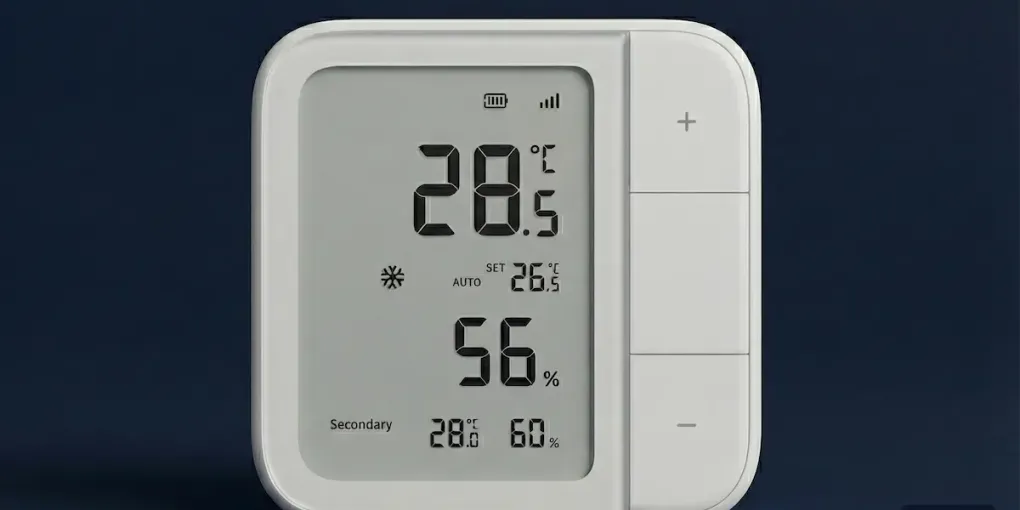
Every smart home needs eyes and ears, but more importantly, it needs to feel. Temperature and humidity sensors are the nervous system of a comfortable home.
Today, we are analyzing the Aqara Climate Sensor W100, identified by FCC ID [**2AKIT-THS04**](https://fccid.io/2AKIT-THS04). Unlike generic multi-functional sensors that try to be clocks or nightlights, this device takes a strict “Minimalist Home” approach.
It lacks a time display and has no backlight. As an embedded engineer, I see this not as a lack of features, but as a deliberate engineering choice to maximize battery life and sensor accuracy. Let’s dig into the FCC documents to see how this philosophy translates to hardware.
Table of Contents
The Teardown: What’s Inside?
The first challenge in designing a climate sensor is Thermal Isolation. The MCU generates heat, and if the sensor is too close, data gets corrupted.
Although internal PCB photos are confidential, the User Manual reveals a key engineering detail: a Battery Pull-Tab mechanism. This indicates that the high-capacity power source (CR2450) comes pre-installed for rapid mass deployment. Based on this layout, we can infer that the thermal design prioritizes physical separation between the battery mass and the sensitive Sensirion sensor element at the edge.
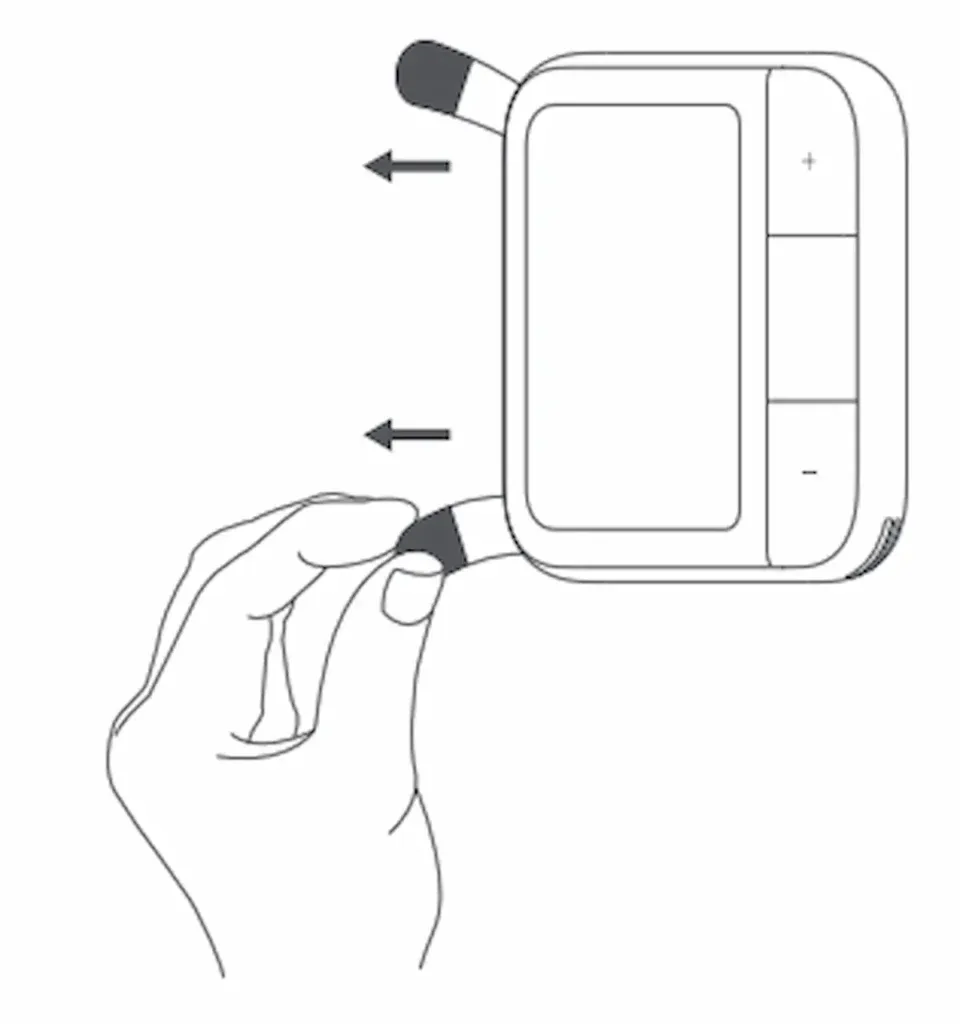
Figure 1: The battery activation pull-tab shown in the manual. This pre-installed power setup confirms the device’s focus on rapid enterprise deployment.
Technical Specifications (Deduced)
| Feature | Specification | Notes |
|---|---|---|
| Model | Climate Sensor W100 | Consumer / Home Series |
| Display | Segment LCD | No Backlight, No Time |
| Sensor IC | Sensirion SHT4x (Likely) | Industry standard for accuracy |
| Power | CR2450 Coin Cell | High Capacity (600mAh) |
| Battery Life | ~2.4 Years | Estimated (Always-on LCD) |
| Connectivity | Zigbee 3.0 | Low power mesh networking |
Engineering Deep Dive
1. The Power Strategy: Why CR2450 Matters
Most consumer sensors stick to the thinner CR2032 battery. Aqara, however, opted for the bulkier CR2450 for the W100. Engineering Insight: This is a massive upgrade. A CR2450 holds approximately 600-620mAh, nearly triple the capacity of a standard CR2032 (~220mAh). By combining this massive energy tank with the removal of the power-hungry backlight, Aqara achieves a staggering 2.4-year battery life. For users, this means consistent data logging without the annoyance of frequent battery swaps.
2. High-Contrast Segment LCD
Since there is no backlight, the readability depends entirely on the reflective polarizer of the LCD. Internal photos show a simple Zebra-strip connection to a Segment LCD. This is old-school technology, but it offers the highest contrast ratio for daylight reading with negligible power consumption. It’s a “Set and Forget” design philosophy.
3. The Brains: Silicon Labs EFR32
The heart of this device is likely a Silicon Labs EFR32MG21 (or MG24) SoC. In the Zigbee world, this is the gold standard. Aqara chose this premium chip for its Radio Performance (Tx Power). Since this sensor might be placed inside a fridge, a humidor, or a far corner of a basement, having a robust RF link budget is more critical than saving a few cents on a cheaper chip.
Performance Prediction
1. Accuracy vs. Latency
Using a dedicated Sensirion sensor (visible as the small black chip with a hole) guarantees high accuracy (typically ±0.3°C). The bottleneck isn’t the hardware; it’s the firmware reporting interval. Without the overhead of maintaining a clock display, the MCU can sleep deeper and wake up only to read the sensor, ensuring pure data integrity.
2. RF Performance (The Meandered F-Antenna)
The PCB reveals a Meandered Inverted-F Antenna (MIFA) printed directly on the board. Engineering Warning: While cost-effective, PCB antennas can be detuned by metal. Users should avoid sticking this magnet-backed sensor directly onto large metal surfaces (like a deep freezer door) without a spacer, as it might reduce the Zigbee range.
3. Battery Life Prediction
Is the 2.4-year lifespan realistic? From an engineering standpoint, yes. Typical Zigbee sensors sleep at <2µA. The Segment LCD consumes negligible power (static drive). With a 600mAh budget provided by the CR2450, the device could theoretically run for years even with frequent reporting intervals. This is a significant advantage over competitors that die within 6-12 months.
Verdict: Engineer’s Take
The Aqara Climate Sensor W100 is a specialized tool for the smart home. It rejects feature bloat to focus on one thing: Reliable Climate Monitoring.
Pros:
-
Battery Beast: No backlight + No clock = Extreme battery life.
-
Focus: Pure environmental data without visual clutter.
-
Accuracy: Physical thermal isolation on PCB is well-designed.
Cons:
-
Visibility: Impossible to read in the dark (No backlight).
-
Single Function: Users expecting a desk clock will be disappointed.
Recommendation: Perfect for placing in every room, wine cellars, or attics where you need data logging rather than a visual display.
💡 Related Teardown: While the W100 sticks to reliable Zigbee, Aqara is also pushing the boundaries with Matter. Check out our deep dive into their latest hybrid device:
👉 [Teardown: Aqara Dimmer Switch H2 (Matter over Thread Analysis)]
Disclaimer: This analysis is based on public FCC documents (ID: 2AKIT-THS04) and technical datasheets. I have not physically tested this device. All opinions are my own based on engineering experience.