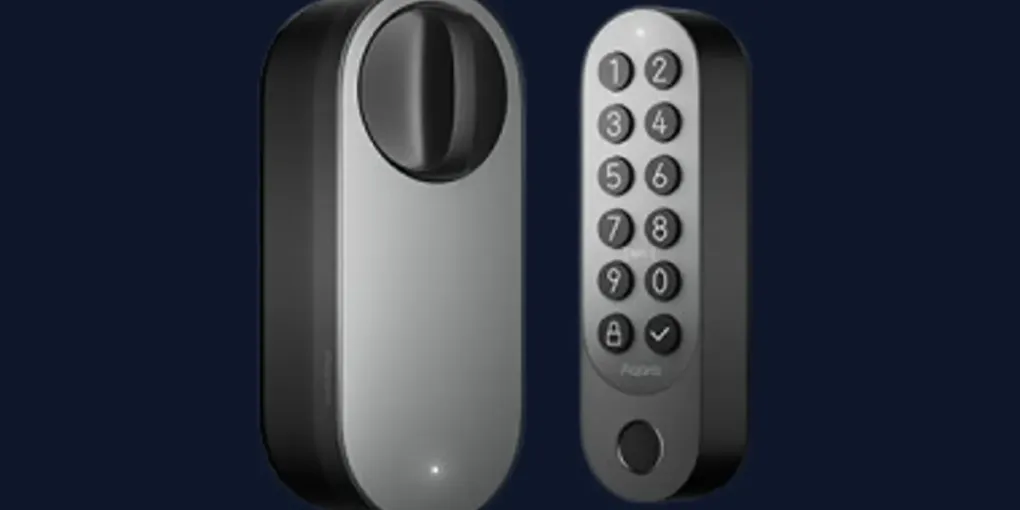
Retrofit smart locks have always faced a dilemma: How do you turn a stiff, rusty deadbolt without draining standard AA batteries in a week? The answer, as revealed in the FCC filing (**[2AKIT-ELD02](https://fccid.io/2AKIT-ELD02)**) and technical documentation for the Aqara Smart Lock U200, is brute force engineering combined with smart sensing.
Today, we analyze the engineering choices behind the U200. While the internal PCB photos remain confidential under FCC rules, the user manual and certification data reveal critical details about its Li-Ion power architecture and Gyroscope-based sensing.
Table of Contents
The Architecture: Power & Mechanics
The U200 is a “Retrofit” lock, meaning it clamps onto your existing deadbolt thumb-turn. This mechanical load requires a powerful motor and a robust gearbox.
Unlike typical locks constrained to a standard 4x AA battery holder, the U200’s manual reveals a dual-power architecture. It ships with a custom, high-voltage rechargeable Li-Ion battery pack but critically includes a 4x AA battery adapter for backup. This flexibility is a significant deviation from the norm and tells us a lot about how Aqara approached the power budget.
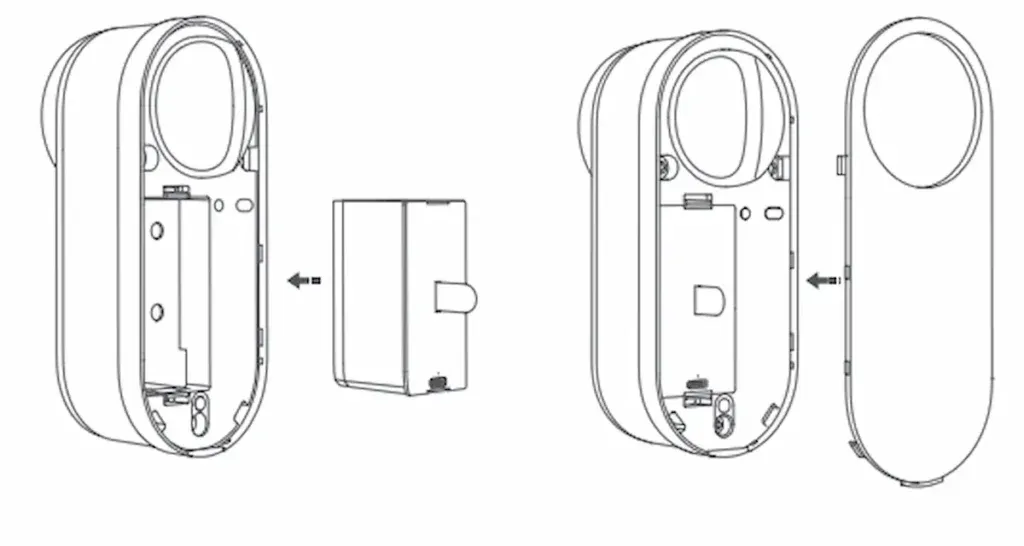
Figure 1: The user manual confirms the use of a custom high-voltage Li-Ion battery pack, which is essential for driving the high-torque motor and Thread radio.
Technical Specifications (Deduced)
| Feature | Specification | Engineering Note |
|---|---|---|
| Model | U200 (EL-D02D) | Retrofit Smart Lock |
| Power | Rechargeable Li-Ion (7.4V) or 4x AA (via adapter) | Dual-power architecture. Li-Ion provides the high peak current necessary for heavy mechanical loads. |
| SoC | Silicon Labs MG24 | Matter over Thread / BLE |
| Sensor | IMU (Gyroscope) | Magnet-free door sensing |
| Motor | High-Torque DC | With reduction gearbox |
Unsure if the rechargeable Li-Ion pack is right for you? We tested it against the AA-powered SwitchBot Lock Pro to see which power architecture is more practical for daily use.
👉 [Read the full showdown: Aqara U200 vs SwitchBot Lock Pro - An Engineer’s Verdict]
Engineering Deep Dive
1. The Li-Ion Advantage: Overcoming the “Stiff Lock” Problem
Most retrofit locks run strictly on AA batteries (6V). As batteries deplete, the voltage sags, causing the motor to lose torque and resulting in ‘Jamming’ errors.
Engineering Insight: While the U200 wisely includes an adapter for standard AA batteries as a fallback, Aqara’s inclusion of a dedicated 7.4V Li-Ion pack as the primary power source is a calculated choice to ensure a stable voltage curve.
-
Torque: Lithium chemistry delivers the high peak current needed to break the static friction of a sticky deadbolt far better than alkaline batteries, which suffer from severe voltage sag under heavy mechanical load.
-
Thread Radio: It also supports the burst power requirements of the Thread protocol without voltage drops that could reset the MCU.
2. The Sensor Innovation: Why No Magnet?
Traditional smart locks require you to stick a magnet on the door frame to detect if the door is “Closed”. The installation guide in the manual shows no door sensor. Instead, it references a “Calibration” step where you open and close the door. This confirms the use of an internal IMU (Inertial Measurement Unit) containing a Gyroscope.
-
How it works: It learns the “angle” of your door. When the gyroscope detects the door has swung to the 0-degree (closed) position, it triggers the Auto-Lock.
-
The Benefit: No ugly magnet to stick on the frame, and less hardware to fail.
3. The Brains: Silicon Labs MG24
Tracing the FCC filings, Lumi (Aqara) certified an “MG24 Bluetooth Module” around the same time as the U200. Deduction: This strongly suggests the use of the Silicon Labs EFR32MG24 SoC. This chip is a beast for Matter over Thread, featuring excellent RF sensitivity (-105.4 dBm) to ensure the lock stays connected even through thick metal fire doors.
This aligns with Aqara’s broader strategy for 2025. We observed a similar Silicon Labs architecture in our recent analysis of the
Verdict: Engineer’s Take
The Aqara U200 solves the two biggest pain points of retrofit locks: Weak Motors and Ugly Sensors.
Pros:
-
High Torque: Li-Ion system handles stiff locks better than AA-powered competitors.
-
Clean Install: Gyroscope means no sensor stuck to your door frame.
-
Native Matter: Future-proof connectivity via Thread.
Cons:
-
Bulkiness: Accommodating a high-torque reduction gearbox and a versatile battery compartment (designed to fit both a substantial Li-Ion pack and a 4x AA adapter) inevitably increases the footprint. The internal unit is noticeably bulky compared to some purely AA-powered alternatives.
-
Size: The internal unit is bulky due to the battery and gearbox mechanism.
Disclaimer: This analysis is based on public FCC documents (ID: 2AKIT-ELD02), technical filings, and user manuals. I have not physically tested this device. All opinions are my own based on engineering experience.