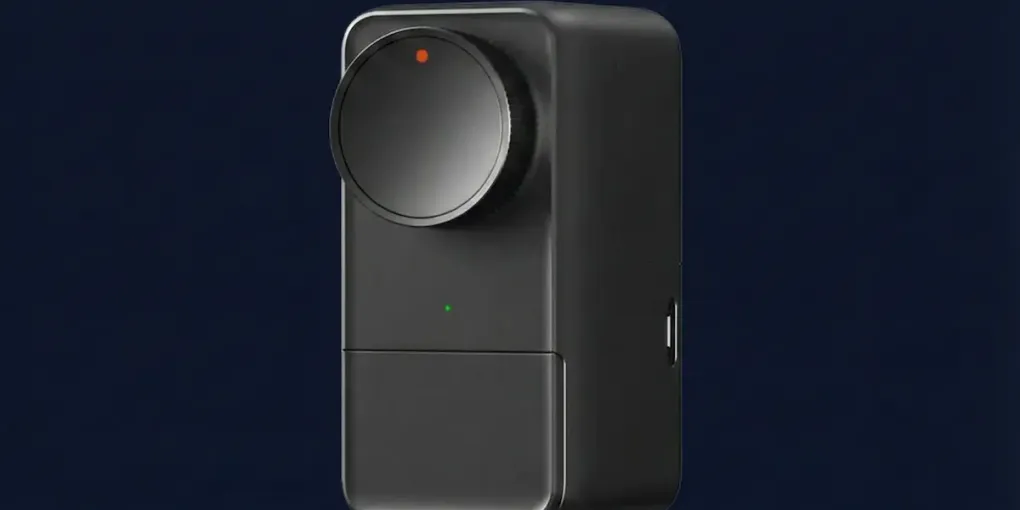
While the smart home industry races toward high-voltage Lithium-ion solutions and native Thread radios (looking at you, Aqara U200), SwitchBot has taken a different path. They have doubled down on mechanical compatibility and widely available power sources.
Today, we are analyzing the SwitchBot Lock Pro through the lens of its public filing (FCC ID: 2AKXB-W3500000) and its pragmatic engineering choices. This isn’t a gadget review; it is an architectural breakdown of how Woan Technology solved the “dumb lock” retrofit problem.
Table of Contents
- The Architecture: AA Batteries and Mechanical Leverage
- Ecosystem & Connectivity: The Bridge Approach
- Mechanical Genius: Universal Fitment
- Verdict: The Engineer’s Take
The Architecture: AA Batteries and Mechanical Leverage
In the current flagship smart lock market, the trend is shifting toward proprietary 7.4V Lithium-ion packs. The logic is simple: higher voltage equals higher motor torque, which is necessary to turn stiff, rusted deadbolts.
SwitchBot, however, opted for standard 4x AA Alkaline Batteries (6V).
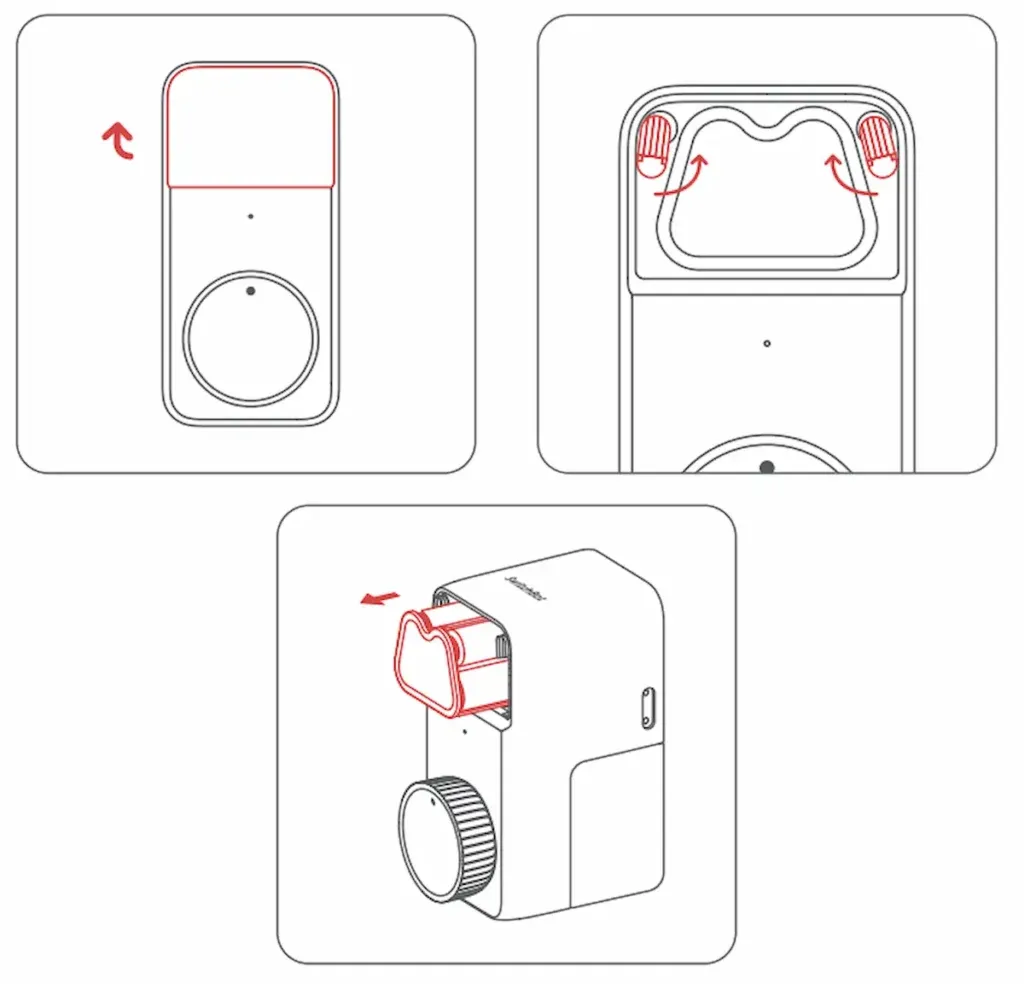
The Pragmatic 6V Rail: Instead of proprietary lithium packs, SwitchBot utilizes four standard AA batteries. This lowers the maintenance barrier and simplifies the power architecture.
Engineering Insight: The “Low Voltage Miracle” via Gear Reduction
How does the Lock Pro achieve a claimed torque of 20kgf·cm (enough to break a wrist if you aren’t careful) using only a standard 6V rail?
The answer lies in the Reduction Gear Ratio.
Instead of increasing the input power (Voltage/Current), SwitchBot engineers drastically increased the gear reduction ratio inside the motor housing.
-
The Trade-off: High gear reduction sacrifices angular velocity (speed) for torque. The Lock Pro is noticeably slower than some solenoid-based locks.
-
The Benefit: It allows the motor to drive heavy deadbolts without requiring a high-discharge Li-ion battery.
From a maintenance perspective, this is a win. You don’t need to wait for a proprietary pack to charge; you simply swap standard AAs found in any convenience store.
Curious how this gear reduction mechanism holds up against a high-voltage motor? We pitted the SwitchBot Lock Pro against the Aqara U200 to analyze torque, speed, and Matter implementation.
👉 [See the Ultimate Comparison: SwitchBot Lock Pro vs Aqara U200]
Ecosystem & Connectivity: The Bridge Approach
According to the FCC filing (2AKXB-W3500000), the onboard SoC is a standard Bluetooth Low Energy (BLE) chipset (likely a Nordic Semiconductor variant, common in SwitchBot hardware).
Engineering Insight: Matter Bridge vs. Native Thread
Unlike the Aqara U200, which utilizes a Native Thread radio (requiring a Thread Border Router), SwitchBot utilizes a Matter Bridge architecture.
-
The Path: Lock Pro (BLE) $\rightarrow$ SwitchBot Hub 2 (Wi-Fi/Matter) $\rightarrow$ Matter Controller.
-
The Pros: This is an “Ecosystem Play.” If you already own SwitchBot thermometers or curtain bots, the Hub 2 acts as a central nervous system. It is the most stable entry point for existing users.
-
The Cons: From a strict network engineering standpoint, this introduces latency. A native Thread packet travels directly to the Border Router. Here, we have a protocol translation layer (BLE to Matter over Wi-Fi).
However, reliability often beats theoretical speed. BLE is lower power than Wi-Fi, allowing the 4x AA batteries to last up to 9 months—a figure hard to achieve with constant Wi-Fi keep-alive signals.
Mechanical Genius: Universal Fitment
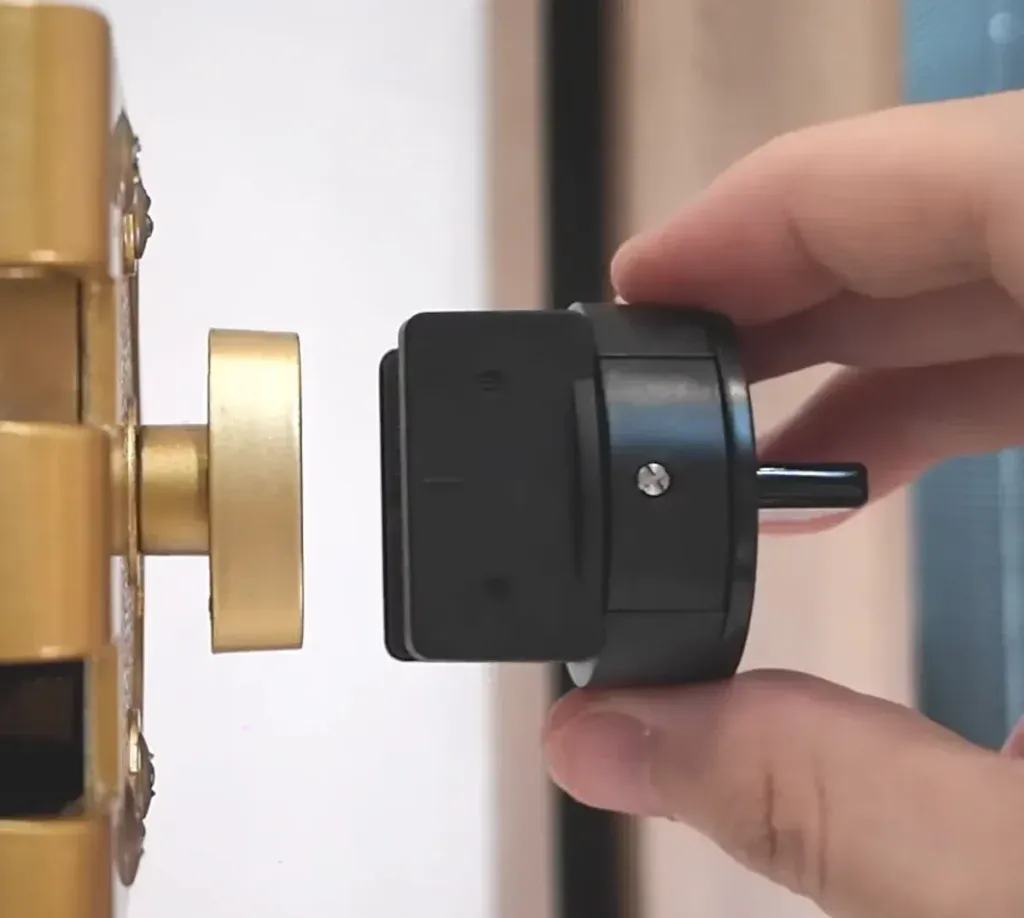
Engineering Tolerance: The universal finger adapter is designed to accommodate variable thumb-turn sizes and absorb mechanical backlash (slop), ensuring reliable torque transfer without precise alignment.
The hardest part of designing a retrofit smart lock isn’t the PCB; it’s the kinematics of attaching a motor to thousands of different manual thumb-turns globally.
Engineering Insight: The Universal Finger Adapter
Most competitors engineer complex clamping mechanisms that squeeze the thumb-turn. These are prone to slipping if the torque is too high.
SwitchBot introduced a “Universal Finger Adapter.”
-
Backlash Management: The design accommodates significant “slop” or Backlash. It doesn’t require a perfect center-of-axis alignment.
-
Torque Transfer: By using a variable-width adapter rather than a friction clamp, it transfers rotational force mechanically rather than relying on friction.
This is a victory of mechanical engineering over electronic complexity. They solved the fitting problem with plastic geometry, not with sensors.
Verdict: The Engineer’s Take
If the [Aqara U200] is a Formula 1 car (high performance, native Thread, Lithium power), the SwitchBot Lock Pro is a Toyota Hilux.
It relies on older, proven power standards (AA batteries) and a bridge architecture (Hub 2) to ensure it works every time, regardless of how “stiff” your door is. It prioritizes mechanical torque via gearing over electronic speed.
Pros:
-
High torque output via gear reduction (works on old doors).
-
Standard AA batteries are superior for long-term maintenance.
-
Mechanical adapter design minimizes installation failure points.
Cons:
-
Requires Hub 2 for Matter (extra hardware).
-
Slower actuation speed due to high gear ratio.
The Bottom Line: Ideally suited for pragmatists who want a set-and-forget solution within the Matter ecosystem.
Disclaimer: This analysis is based on FCC filings (2AKXB-W3500000), technical specifications, and mechanical theory. Actual performance may vary based on installation environment.